
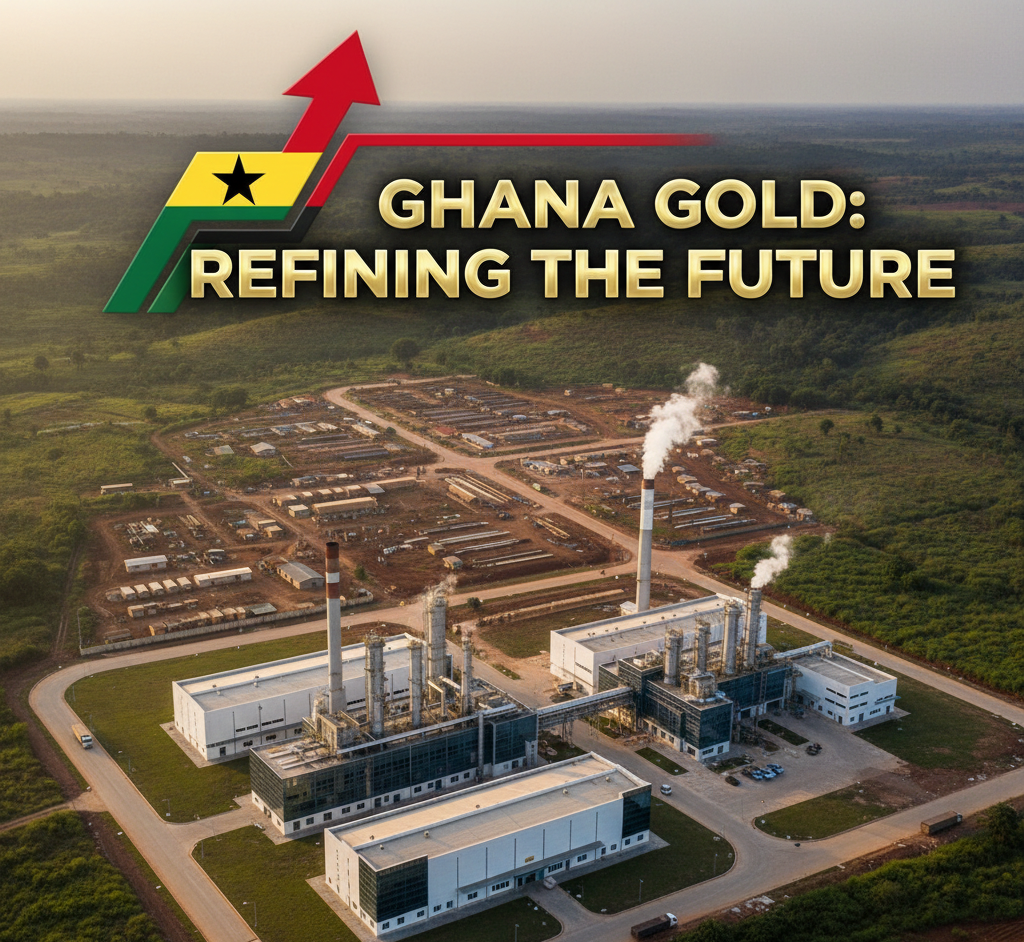
The Ghana gold refining industry is entering a transformative era as the country shifts from exporting raw gold to refining it locally. This move marks a strategic step toward economic independence, job creation, and stronger positioning in the global precious metals market.
For companies like Koinonia Gold Refinery Ltd, this transformation represents an opportunity to drive innovation, improve gold value retention, and support Ghana’s vision of becoming a regional gold refining hub.
Why Exporting Raw Gold Has Cost Ghana Billions
For decades, Ghana exported most of its gold in unrefined form. While this brought foreign exchange, it also meant that the true value of Ghanaian gold was determined abroad.
When gold is refined overseas, Ghana loses:
- Refining fees
- Purity premiums
- Verification control
- Value-added economic benefits
As a result, the country has historically missed out on significant revenue that could have strengthened its economy.
The Economic Benefits of Local Gold Refining
Local refining changes the entire gold value chain. Instead of exporting raw material, Ghana can export high-purity refined gold, capturing more value within the country.
1. Revenue Retention
Refining gold domestically ensures that processing fees and premium pricing stay within Ghana, strengthening national income.
2. Job Creation
Gold refineries operate continuously and require skilled professionals in metallurgy, quality assurance, logistics, and compliance. This creates both direct and indirect employment opportunities.
3. Tax and Fiscal Growth
Local refining expands corporate and personal tax contributions, increasing government revenue and funding national development.
4. Silver and By-Product Recovery
Domestic refining also allows Ghana to recover silver and other valuable by-products, supporting local jewelry manufacturing and downstream industries.
Ethical Gold and Sustainability in the Ghana Gold Refining Industry
Global gold buyers increasingly demand traceability, ethical sourcing, and sustainability. Ghana’s alignment with OECD and LBMA responsible sourcing standards positions the country favorably in premium markets.
Koinonia Gold Refinery supports responsible gold refining practices by promoting:
- Transparent supply chains
- Environmental responsibility
- Compliance with international bullion standards
This strengthens Ghana’s reputation and attracts high-value international buyers.
How Local Refining Strengthens Ghana’s Global Market Position
By refining gold domestically, Ghana can:
- Increase negotiating power in global markets
- Attract foreign direct investment
- Build investor confidence in its gold sector
- Empower local miners, traders, and SMEs
A strong refining industry transforms Ghana from a raw material exporter into a value-added precious metals producer.
Challenges and the Path Forward
While the opportunities are significant, the Ghana gold refining industry must address key challenges:
- Ensuring consistent gold supply from miners
- Expanding refining capacity and technical expertise
- Educating miners and buyers on local refining benefits
- Maintaining global price competitiveness
Strategic partnerships, infrastructure investment, and regulatory support will be critical to long-term success.
The Future of Ghana’s Gold Refining Industry
Ghana’s push toward domestic gold refining represents more than an economic policy—it is a national transformation strategy. By refining gold locally, Ghana can unlock generational wealth, strengthen its economy, and become Africa’s leading gold refining hub.
At Koinonia Gold Refinery Ltd, we are committed to supporting this vision through world-class refining services, ethical sourcing practices, and technological innovation